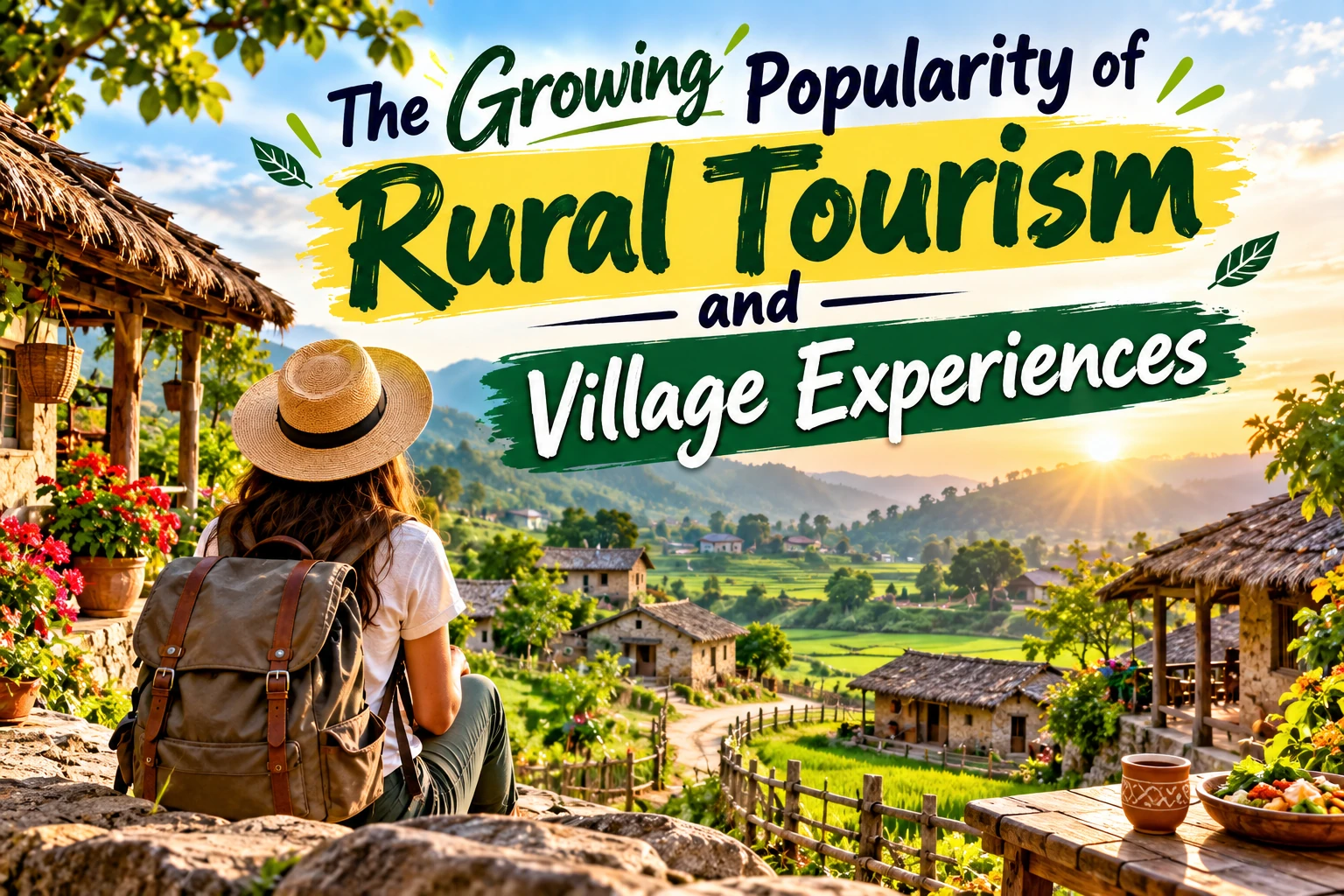
Travelers are increasingly looking beyond crowded cities and famous tourist attractions for experiences that feel slower, more personal, and connected to local life. This has contributed to growing interest in rural tourism and village experiences.
Rural tourism allows visitors to explore countryside landscapes, traditional communities, local food, crafts, farming practices, festivals, and everyday lifestyles. Rather than simply visiting a landmark, travelers can spend time understanding how people live in a particular region.
What Is Rural Tourism?
Rural tourism generally refers to travel experiences in countryside and village areas where agriculture, nature, traditional lifestyles, and local culture are important parts of the destination.
Activities can vary widely. Visitors might stay in a village homestay, participate in farming activities, learn traditional cooking, explore walking trails, visit local artisans, or attend a cultural festival.
The exact experience depends on the region, but the central idea is to connect visitors with rural environments and communities.
A Break From Busy City Life
One reason rural tourism has become attractive is the desire for a slower pace of travel. Large cities can be exciting, but they may also involve traffic, crowds, noise, and busy schedules.
Rural destinations often provide opportunities to spend time in quieter surroundings. Mountains, fields, forests, rivers, lakes, and open landscapes can create a different atmosphere.
For travelers looking for relaxation, a village stay can offer an alternative to conventional city vacations.
Authentic Local Experiences
Village tourism can provide opportunities to experience local traditions more directly. Instead of simply reading about a culture in a museum, visitors may learn how traditional food is prepared, observe local crafts, or participate in community activities.
For example, a village may be known for pottery, weaving, woodwork, farming, traditional dance, or regional cuisine.
When these experiences are organized with community participation, visitors can learn about local traditions while supporting the people who maintain them.
Rural Tourism Supports Local Economies
Tourism can create additional sources of income for rural communities. Visitors may spend money on accommodation, food, transportation, handicrafts, guided activities, agricultural products, and cultural experiences.
Homestays can provide income directly to local families, while village restaurants and small shops can benefit from increased visitor activity.
This economic activity can create opportunities beyond traditional agricultural employment.
Promoting Local Food
Food is often one of the highlights of rural tourism. Village communities may have recipes and cooking methods that are closely connected to local agriculture and culture.
Visitors may have opportunities to taste freshly prepared regional dishes, learn traditional cooking techniques, or purchase locally produced ingredients.
This can create an important connection between tourism and local agriculture.
Farm and Nature Experiences
Many rural destinations offer activities related to agriculture and nature. Depending on the location and season, visitors might participate in harvesting, gardening, animal care, nature walks, or other farm activities.
Such experiences can help visitors understand where food comes from and how rural communities depend on natural resources.
Nature-based activities can also introduce travelers to local landscapes and biodiversity.
Learning Traditional Crafts
Traditional crafts are another important part of village tourism. Pottery, textiles, basketry, painting, wood carving, metalwork, and other skills are often passed between generations.
Workshops can allow visitors to observe artisans or try simple techniques themselves.
Purchasing authentic locally made products can also provide direct support to craftspeople.
Benefits for Younger Generations
Rural tourism may create new employment opportunities for younger residents. Instead of leaving villages permanently to search for work elsewhere, some young people may find opportunities in hospitality, guiding, transportation, food services, digital marketing, or cultural activities.
Tourism can therefore contribute to diversification of rural economies.
However, tourism should complement existing livelihoods rather than force communities to change their traditions solely to satisfy visitors.
Protecting Rural Culture
Increased tourism can bring both opportunities and challenges. If poorly managed, excessive tourism may create waste, increase pressure on resources, or encourage cultural practices to become overly commercialized.
Responsible rural tourism should involve local communities in decisions about tourism development.
Visitors should respect local customs, dress appropriately where required, ask permission before taking photographs, and avoid treating residents or cultural traditions as entertainment.
Technology Is Making Villages Easier to Discover
Digital platforms have made it easier for travelers to discover lesser-known destinations. Photos, travel videos, blogs, online booking platforms, and social media can introduce rural communities to audiences around the world.
This increased visibility can benefit local tourism businesses, but it also means destinations need thoughtful planning to handle sudden increases in visitors.
The Future of Rural Tourism
Rural tourism is likely to remain attractive to travelers who want meaningful experiences rather than highly scheduled sightseeing trips.
The future of this sector may involve a combination of homestays, farm experiences, nature tourism, cultural workshops, local food, and community-led activities.
The most successful approaches are likely to be those that provide genuine visitor experiences while ensuring that local communities receive meaningful economic and social benefits.